
Kitchen Countertop Repair: A Complete, Practical Guide

Kitchen countertop repair is an essential topic for anyone living in an apartment, managing a rental property, or owning a home. Kitchen countertops are among the most frequently used surfaces in any living space. They handle daily cooking, cleaning, food preparation, and appliance use. Because of constant exposure to heat, moisture, sharp objects, and heavy items, countertops naturally experience wear over time. Small problems such as chips or stains may appear harmless, but if ignored, they can turn into expensive repairs or full replacements. A well-written, practical understanding of kitchen countertop repair helps property owners and residents maintain both functionality and appearance while staying within budget.
Why Kitchen Countertops Get Damaged
Kitchen countertops are designed to be durable, but no material is completely damage-proof. One of the most common causes of damage is daily use without proper care. Placing hot cookware directly on the surface, cutting food without a cutting board, and allowing water to sit near seams can slowly weaken the countertop. In apartments and rental kitchens, countertops often face heavier use due to multiple occupants over time. This repeated stress increases the likelihood of cracks, burns, swelling, and surface wear, making kitchen countertop repair a common maintenance need.
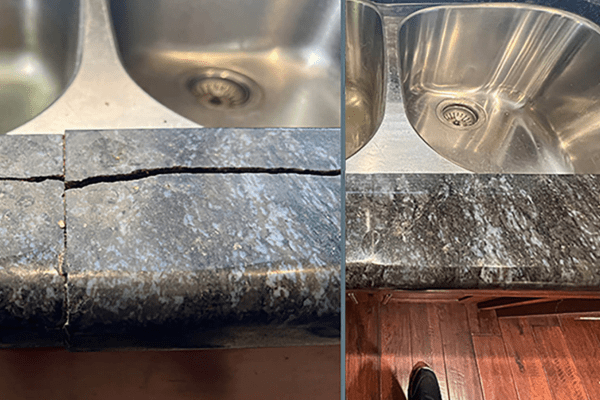
Moisture is another major factor. Kitchens involve frequent washing, spills, and steam. When water penetrates seams, edges, or joints, it can cause internal damage that is not immediately visible. Over time, this moisture can lead to warping, swelling, or separation, particularly in laminate and wood-based countertops. Repairing these issues early helps prevent deeper structural problems.
Common Kitchen Countertop Problems
One of the most frequent reasons for kitchen countertop repair is cracking or chipping. These issues often occur when heavy items are dropped or when the countertop lacks proper support underneath. Even small chips can collect food debris and bacteria, affecting hygiene. Cracks can expand over time, especially if moisture enters the damaged area.
Burn marks are another common issue, especially on laminate and solid surface countertops. Hot pots and pans can leave scorch marks that permanently discolor the surface. While some light burns can be minimized, deeper burns usually require professional repair to restore the countertop’s appearance.
Stains and discoloration are also common, particularly on porous surfaces. Food spills, cleaning chemicals, and oils can leave marks that are difficult to remove. Over time, these stains can make the kitchen look old and poorly maintained, even if the structure is still sound.
Kitchen Countertop Repair by Material Type
The method used for kitchen countertop repair depends largely on the material. Laminate countertops, which are common in apartments and rental units, are more affordable but also more vulnerable to heat and moisture. Minor chips or scratches can often be repaired using color-matched fillers and sealants. However, once water damage causes swelling, repairs become limited, and replacement of the affected section may be necessary.
Stone countertops such as granite and marble are stronger but still require care. Chips and cracks in stone surfaces are usually repaired using epoxy resin that matches the natural color of the stone. Proper polishing is essential to blend the repair and maintain a smooth finish. These materials also require sealing to protect against moisture and staining.
Quartz countertops are engineered for durability, but heavy impacts can still cause edge damage. Repairs typically involve specialized adhesives and surface leveling. Because quartz patterns are manufactured, color matching is especially important for a seamless repair.
Wood and butcher block countertops require a different approach. Scratches and minor cracks can often be sanded out and resealed. Regular oiling helps maintain the surface and prevents drying or splitting, reducing the need for frequent kitchen countertop repair.
DIY vs Professional Kitchen Countertop Repair
Many people consider handling kitchen countertop repair on their own, especially for minor damage. Small scratches, light stains, and tiny chips can sometimes be repaired using store-bought kits. These solutions are useful for cosmetic improvements and temporary fixes, particularly in rental situations.
However, larger cracks, structural damage, and repairs involving stone or quartz surfaces usually require professional expertise. Incorrect repair methods can worsen the damage and reduce the lifespan of the countertop. Professional repair ensures proper materials, correct techniques, and long-lasting results, making it a better option for significant issues.
Cost of Kitchen Countertop Repair
The cost of kitchen countertop repair varies depending on the type of material and the severity of the damage. Minor repairs are generally affordable and much cheaper than full replacement. More complex repairs, such as stone crack filling or resurfacing, cost more but still offer savings compared to installing a new countertop.
In rental properties, timely repairs help property owners maintain the kitchen’s condition and avoid major renovation expenses. For tenants, reporting damage early can prevent misunderstandings and additional charges at the end of a lease.
Kitchen Countertop Repair in Apartments and Rentals
In apartment and rental settings, responsibility for kitchen countertop repair often depends on the lease agreement. Damage caused by normal wear and tear is usually handled by the property owner, while damage caused by misuse may fall on the tenant. Clear communication and early reporting of issues help ensure fair and timely repairs.
Well-maintained countertops improve the overall appearance of rental units and increase tenant satisfaction. Addressing repairs promptly also helps prevent small problems from becoming major maintenance concerns.
Preventing Countertop Damage
Preventive care is one of the most effective ways to reduce the need for kitchen countertop repair. Using cutting boards, placing hot items on heat-resistant mats, and wiping up spills immediately can significantly extend countertop life. Avoiding harsh chemicals and using proper cleaning products also helps maintain the surface finish.
For stone countertops, regular sealing is essential to protect against moisture and stains. Simple daily habits can save both time and money by reducing long-term damage.
Conclusion
Kitchen countertop repair plays a vital role in maintaining a functional, hygienic, and attractive kitchen. From minor cosmetic issues to more serious structural damage, addressing problems early helps avoid costly replacements and improves the overall cooking environment. Whether you live in an apartment, manage rental properties, or own a home, understanding countertop repair options allows you to make informed decisions. With proper care, timely repairs, and the right maintenance approach, kitchen countertops can remain durable and visually appealing for many years to come.